
Madison & Dane County, Wisconsin
Yard Drainage & French Drains in Madison, WI
Standing water doesn't fix itself, and it rarely stays where it started. We design and install drainage systems that move water off your property and away from your foundation.
NDS Certified Professional Drainage Contractor. We're trained and certified by NDS, the largest manufacturer of professional drainage products in North America, to size and design systems based on actual runoff — not guesswork.
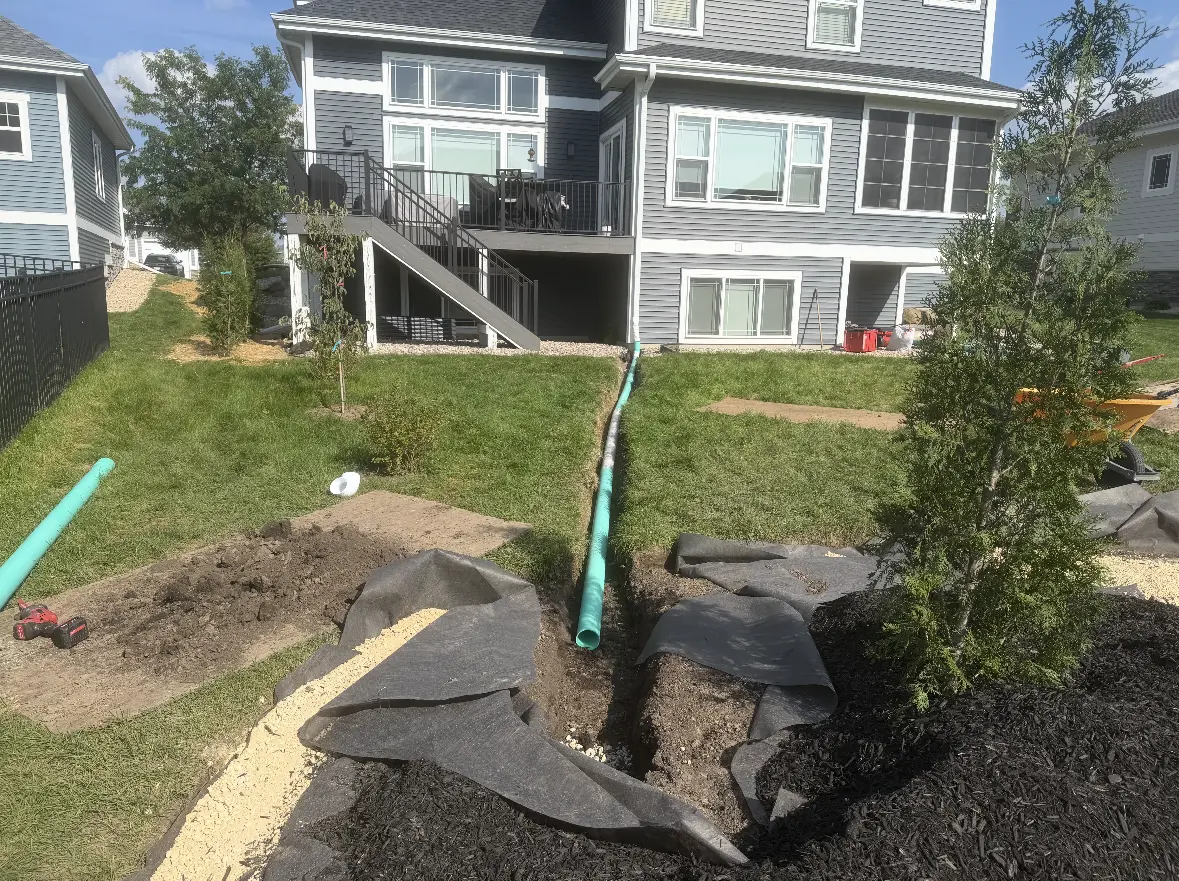
Signs you have a drainage problem
Most homeowners call us about one of these:
- Standing water in the yard that lingers for days after rain
- Soft, soggy ground that never fully dries out
- Water pooling against the foundation or along the driveway
- Downspouts dumping straight onto the ground beside the house
- A low spot where grass drowns out and dies every spring
- Mulch or rock washing out of beds after a heavy storm
Left alone, these get more expensive. Water against a foundation finds its way in, and saturated soil undermines patios, walkways and walls.
What we install
Buried downspout lines
Downspouts piped underground and carried well away from the house, discharging through a pop-up emitter that stays hidden in the lawn until water pushes it open.
French drains
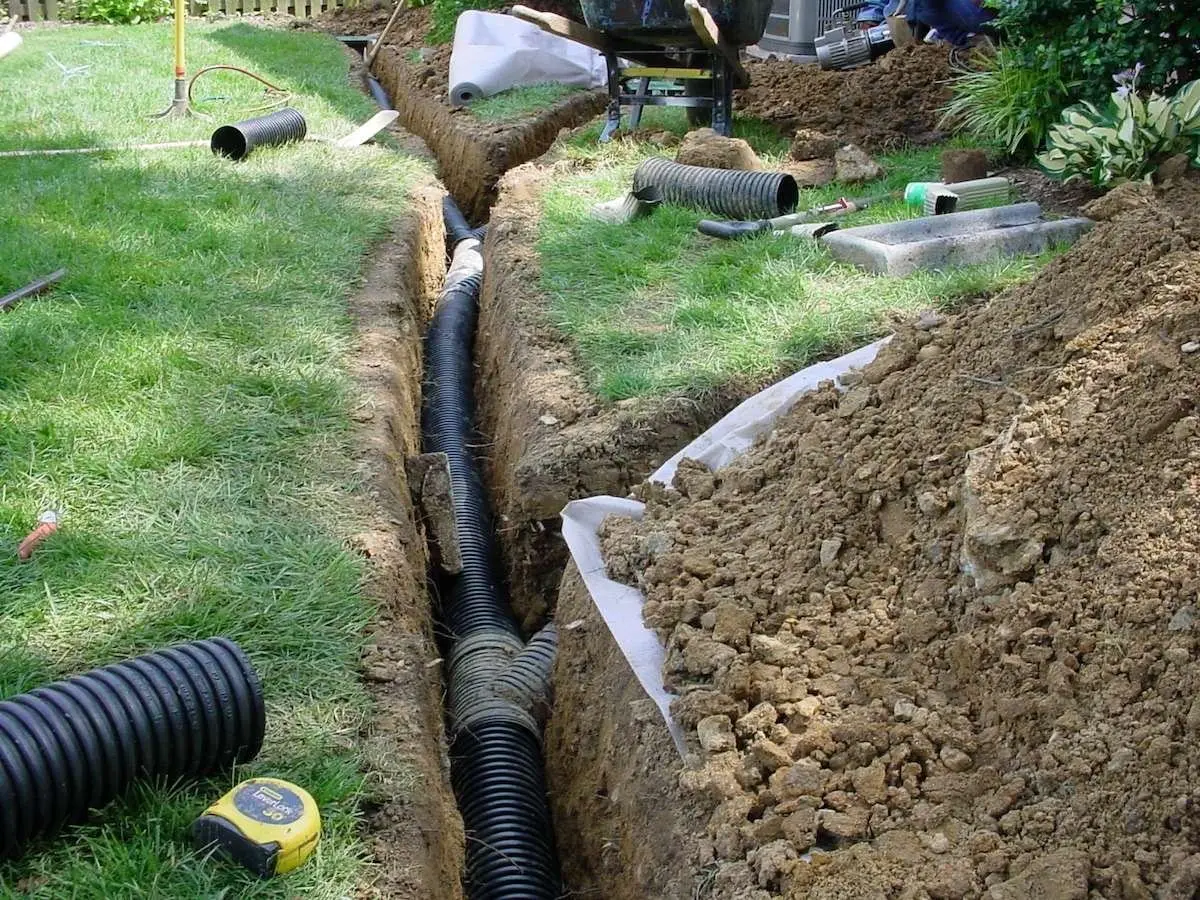
Perforated pipe in a clean stone trench, wrapped in filter fabric, to collect subsurface water from a saturated area and carry it to a discharge point.
Surface regrading and swales
Reshaping the ground so water runs where you want it to. Often the most durable fix, and sometimes the only one that solves the actual problem.
Channel drains
A grated channel set flush along a driveway, garage apron or patio edge catches water running across the hard surface and pipes it away before it reaches the house or the lawn.
Sump discharge lines
Sump pump discharge routed underground and away from the foundation, so the water your pump removes doesn't drain straight back toward the house.
Drainage for wet planting beds
Beds that hold water drown plants and wash out mulch. We correct the grade and add drainage so the bed sheds water instead of collecting it.
French drains, built for Dane County clay
A French drain collects water that is soaking the ground and gives it an easy path out. It only works if the water has somewhere lower to go and the trench is built so it doesn't clog. Ours are built like this:
- A trench dug along the wet area, sloped the whole way toward the outlet.
- Filter fabric lining the trench, so the clay can't silt up the stone.
- Clean drainage stone under and around a perforated pipe.
- The fabric folded over the top, then soil and seed, sod, rock or mulch to match what was there.
- The pipe carried to a discharge point: lower ground, a pop-up emitter in the lawn, or a planting bed that can take the water.
Not every wet yard needs one. When the water is running across the surface rather than sitting in the soil, regrading or a swale is usually the better and cheaper fix — we'll tell you which one your yard needs.
How we find the right fix
Every wet yard looks the same from the driveway and almost none of them have the same cause. Surface water and subsurface water need different solutions, and installing the wrong one is how people end up paying twice.
We walk the property, find where water enters and where it's actually going, check the grade, and identify a discharge point that works. Then we size the system to the runoff your property produces rather than defaulting to a standard trench.
You'll know what we're installing and why before any digging starts.
What drainage work costs depends on
- How far the water has to be carried to a place it can go
- How deep the line has to run and how much digging that means
- Whether a machine can get in or the trench is dug by hand
- What it runs under or beside: lawn, beds, a patio, a driveway
- How many downspouts or wet spots are tied in
- Putting the lawn and beds back afterward
We price it after walking the property, in writing, before anything is dug.
Common questions
Why is water pooling in my yard?
Usually grade, soil, or both. Water runs toward the low point, and if that's beside your house or in the middle of the lawn, it sits there. Heavy clay soil — common across Dane County — drains slowly, so water that would soak away elsewhere stays on the surface here. Downspouts discharging next to the foundation make it worse by concentrating roof runoff in one spot.
Will a French drain fix a wet basement?
Sometimes, and sometimes not. Exterior drainage helps when water is collecting against the foundation from the surface or from downspouts. If water is coming through a crack or under the footing, that's a foundation issue and you need a waterproofing contractor. We'll tell you honestly which one you're dealing with.
How long does a drainage project take?
Most residential drainage work runs one to three days depending on the length of the run, access for equipment, and how much restoration the lawn needs afterward. We'll give you a timeline with the estimate.
Where does the water go?
Somewhere lower that can take it: a lower part of your yard, a pop-up emitter out in the lawn, the street side of the property, or a planting bed built to soak it up. We find the outlet before anything else, because a drain with nowhere to go just moves the puddle.
Will my lawn be torn up?
Only along the trench. When the line is in, the trench is backfilled and the ground put back with topsoil and seed or sod, or the rock or mulch that was there before. Grass over a new line usually fills in within the season.
Can drainage go in with a patio, wall or artificial turf?
Yes, and that's the best time to do it. A patio, wall or turf built on ground that holds water heaves and settles, so we plan the drainage into the base of those projects rather than adding it later.
When can drainage work be done in Wisconsin?
Roughly April through November, once the ground has thawed and before it freezes. Spring is when most people notice the problem, which makes it the busiest time — if you're seeing standing water now, get on the schedule early.
Related work
Drainage near you
Get a free estimate
Show us where the water goes. We'll walk the property and tell you what it will take to fix it.
Serving Madison, Middleton, Verona, Waunakee, Fitchburg, Monroe, New Glarus and all of Dane, Green & Rock County.