
How to Fix a Wet or Flooding Yard in Madison, WI
Most wet yards don't need the biggest fix. They need the right one, and that depends on where the water is coming from.
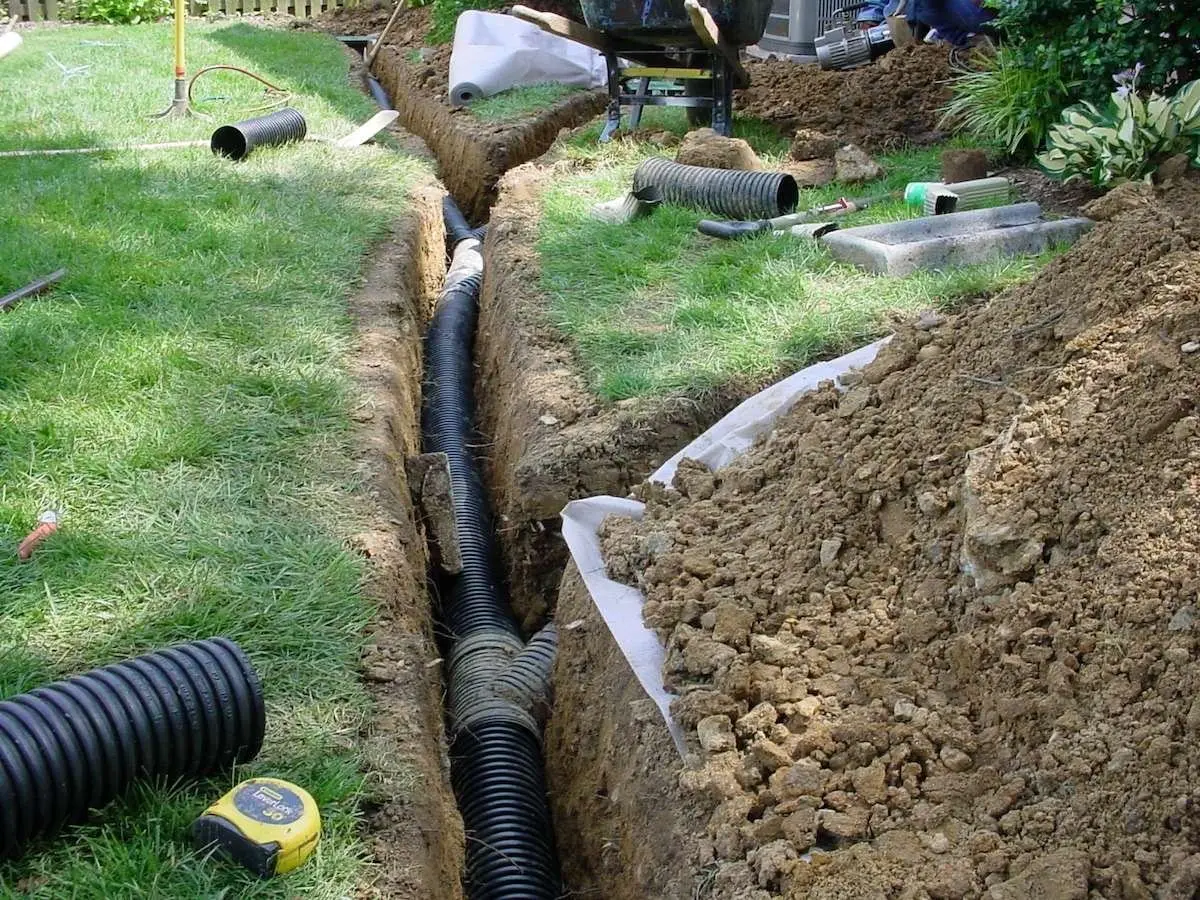
Much of Dane County sits on clay soil that holds water and drains slowly, so a yard that was fine for years can turn soggy after a grading change, a new neighbor's addition or a few wet springs. Start by figuring out what the water is doing.
Step 1: Watch it during a rain
Go out during a good rain, or right after one, and look for four things:
- Where do your downspouts empty, and does that water run back toward the house?
- Is water running across the surface, or just sitting in one low spot?
- Is the ground soggy for days even when nothing is running over it?
- Does the water stop at a walk, a patio or a driveway and pool there?
Moving water and soaked ground need different fixes. Getting that wrong is how people end up paying twice.
Downspouts: start here
Roof water is the most common cause of a wet yard or a wet foundation wall, and it's the cheapest thing to fix. One storm can put hundreds of gallons off a roof and right next to the house. A buried line carries that water away to a spot that can take it, and a pop-up emitter lets it out into the lawn.
Regrading or a swale: for water running across the surface
Ground near the house should fall away from it. If it has settled or was never graded right, reshaping the soil or adding a shallow swale gives surface water a path. When water is moving rather than sitting, this is usually better and cheaper than a drain.
A French drain: for ground that stays soaked
A French drain collects water that's soaking the soil and gives it an easy way out. It is a sloped trench lined with filter fabric, with clean stone around a perforated pipe, and it only works if the water has somewhere lower to go. In clay soil the fabric matters, because silt is what clogs a drain over time.
A channel drain: for hard surfaces
When water sheets off a driveway, garage apron or patio, a channel drain set into the surface catches it before it reaches the house or the lawn.
What about a dry well?
A dry well stores water underground and lets it soak in slowly. That works in sandy soil. In heavy clay the water often has nowhere to go, so around Madison it's usually not the first choice.
Where the water ends up matters
Moving water off your yard doesn't mean you can send it anywhere. The City of Madison's sump pump guidance says discharge shouldn't flow directly onto a neighboring property or the right-of-way, and curb discharge can cause ice and algae problems in the street. Before you add a sump line, check with Madison Engineering. A good drainage plan finds an outlet on your own lot that can take the water. And call Diggers Hotline before anyone digs. It's free and it's the law.
Not sure what you've got?
Every wet yard looks the same from the driveway. We walk the property, find where the water comes in and where it goes, and tell you what your yard needs before anything is dug. See our drainage work or get a free estimate.